

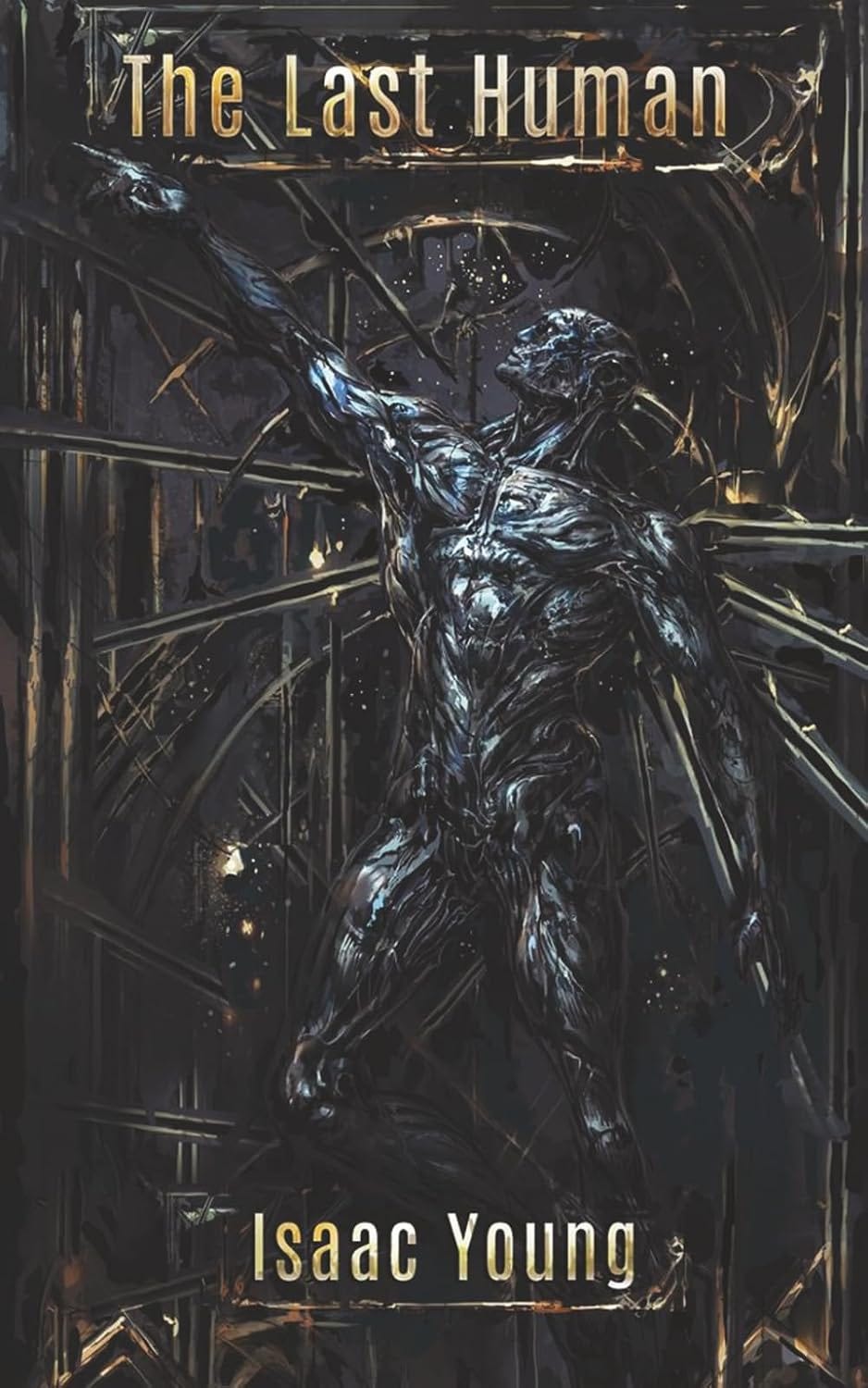
The Last Human
The aftermath of the Great Galactic Replacement

There’s an end times vibe to our zeitgeist. The regime is preoccupied with anthropogenic climate change, which it and its adherents treat as an apocalyptic threat. Fertility collapse has population pyramids inverting all over the planet, while the varying rates at which this has happened has led to geographically unbalanced youth bulges which are tapped for immigrant labour by the societies in which the collapse happened earlier. For inhabitants of first world countries there’s a palpable sense of being replaced, of belonging to a dwindling population whose territory is gradually being overtaken by a diverse and various Big Other, and that your kind is destined for extinction in the near future. While replacement migration dominates the politics of every first world country, artificial intelligence rises in parallel. AI bills itself explicitly as an eschatological technology that will make human labour so redundant in every conceivable capacity that it may lead to the extinction of man.
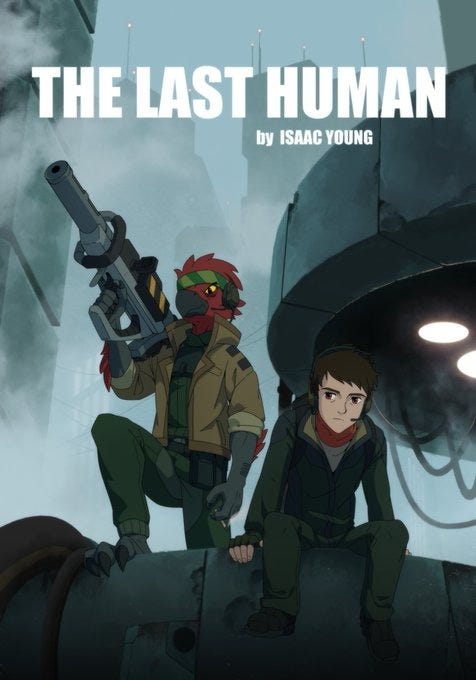
The Last Human processes these anxieties through the funhouse mirror of a far future Galactic society. Isaac Young’s protagonist, Vas du’Kaal, is so far as he or anyone else knows the last human boy in the Galaxy. The Galaxy is vast so it is impossible to know for sure that there are no others, but Vas’ adoptive father, Amon Russ, estimates the number of humans in the Galaxy to be a hundred thousand at most, amidst a Galactic population of quadrillions. To put that in perspective, there is one human per ten billion aliens. Put another way, you would have to search a million of the Milky Way’s stars to find a single human. Despite thousand-year lifespans, there having been some genetic engineering along the way, and despite access to faster-than-light travel via both onboard space drives and jump gates, this is too many stars for one to man visit in a lifetime. Even if someone visited a new star every day – and it takes much longer than that to cross interstellar distances – one could spend one’s entire life searching, and cover barely more than a third of the necessary number of stars.
The Galaxy is full of life because humans made it that way. They are essentially the elder gods of almost every intelligent species in the Milky Way, the majority of which were uplifted from various terrestrial animals, with the only exceptions being a handful of true aliens, of which humanity was the contact-making species, and the second-generation uplifts created by humanity’s own creations using the methods that humanity taught them. All life has passed through human hands, and practically all technology, all culture, and all language descends from the human mind. For all their divine status, here in their twilight humanity is more treasured than they are honoured: humans are captured and traded as valuable rarities by powerful aliens who consider humans to be relics, while the newer races, the second-generation uplifts, do not even recognize humans to look upon them. The alien cultures developed by the uplifted species are parodies of human civilization, filtered through alien moralities in which cruelty is a virtue and torture a sacrament.
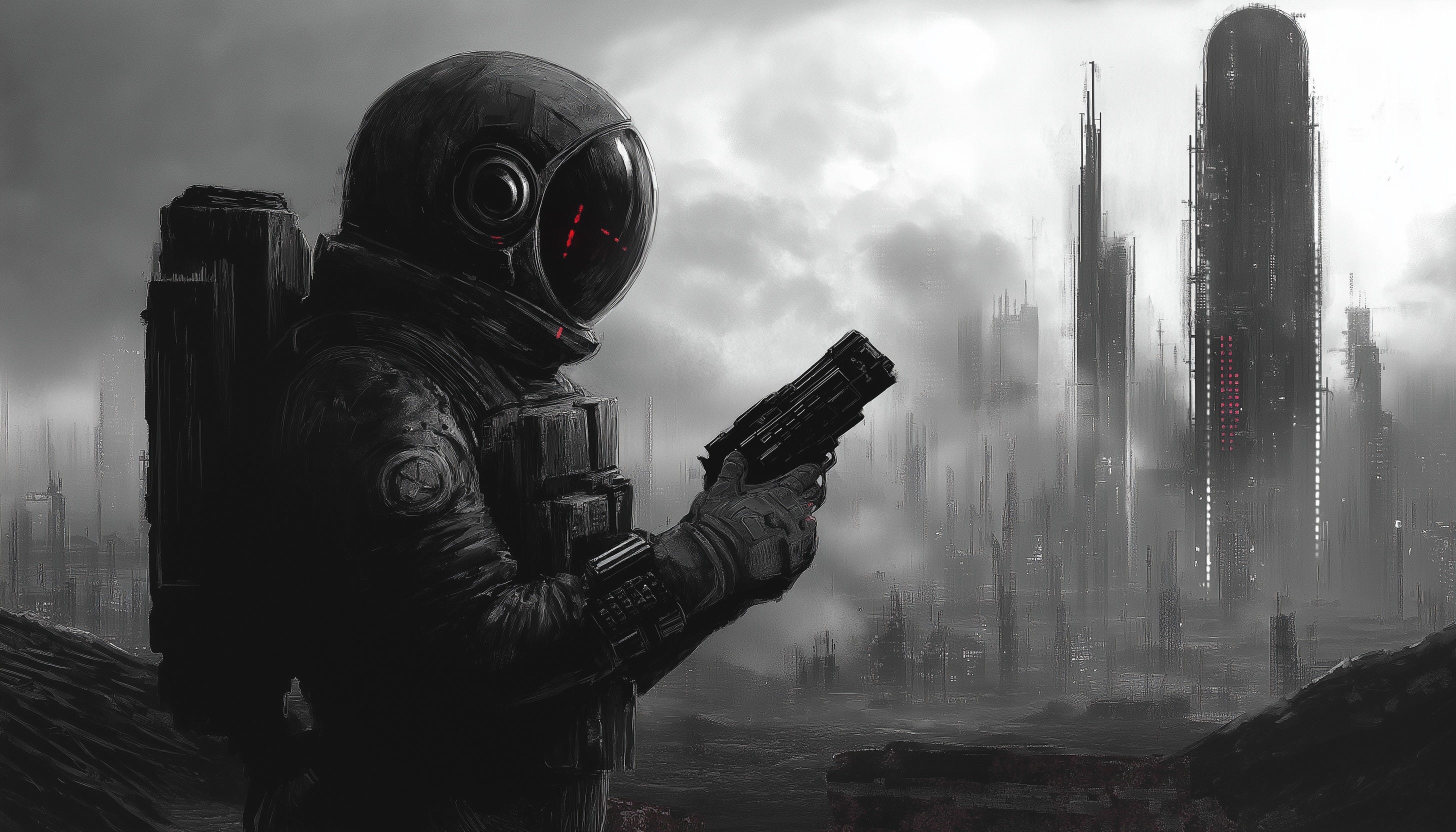
In keeping with this fall from grace, Vas’s initial upbringing is not particularly divine. His earlier years are not spent amongst the stars, but as a slave on a world with a toxic atmosphere where the dominant intelligent species is an uplifted insect. That species is itself at the very bottom of the socioeconomic structure of the Galaxy, regarded by more elevated races with contemptuous distaste. Vas is therefore the very lowest of the low, and has known nothing but tedium, pain, work, and indifference throughout his life. He barely even knows how to speak, since it is impossible for his mouth to form the phonemes of the Mantza language, and the insects themselves are not great conversationalists in any case.
This is how we meet the story’s hero. At the same time, as the book opens, we find out that we are reading the memoir of an interstellar warlord who made himself the emperor of the Galaxy through bloody conquests that claimed the lives of uncountable trillions. This is a very interesting authorial choice, since by adopting the old style of first person narrative in which the narrative is presented as an historical document such as a diary or a letter, Young necessarily reveals the end of the story at the very beginning. Vas survives. Vas wins. Vas succeeds completely. Vas is a true hero, and the story has a happy ending. The only question is how he gets there. This makes the narrative as much the unfolding of a lore as it is a drama. Within the first few pages of the novel, Young has sketched the broad outlines of the world, and identified the protagonist as the central axis around which history will now turn.
History’s wheel sets into motion when Amon Russ lands on the planet of Vas’s birth. Russ is a bounty hunter, and an extremely good one because he is a human veteran of the Fifth Aberrant War, the war in which humanity destroyed itself in the act of eliminating an enemy which threatened the entire Galaxy. By sheer chance Vas gets caught up in Russ’s pursuit of a bounty. Russ, beside himself with amazement at stumbling across a juvenile human in such conditions, buys him from the bugs on the spot and adopts him.
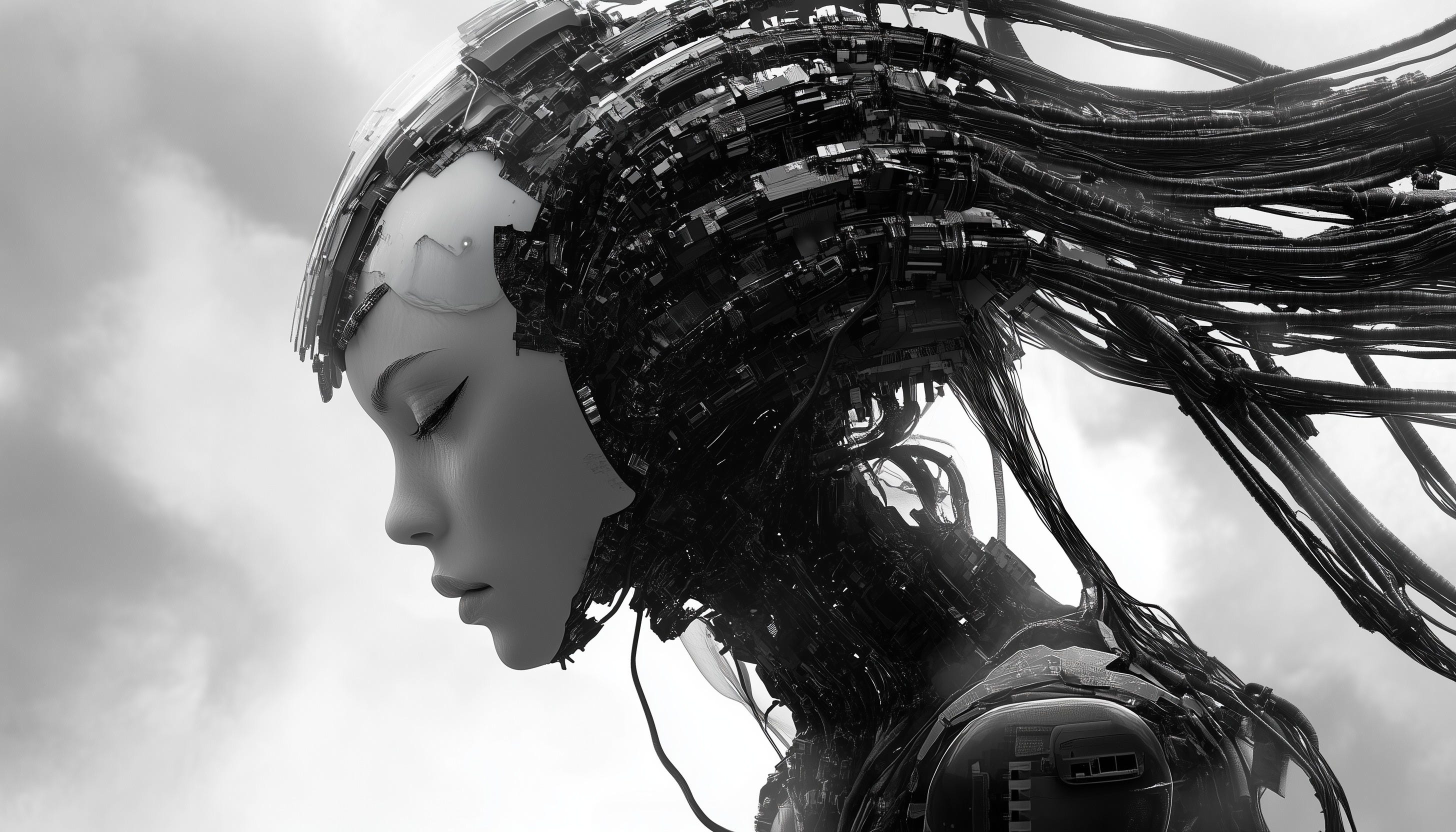
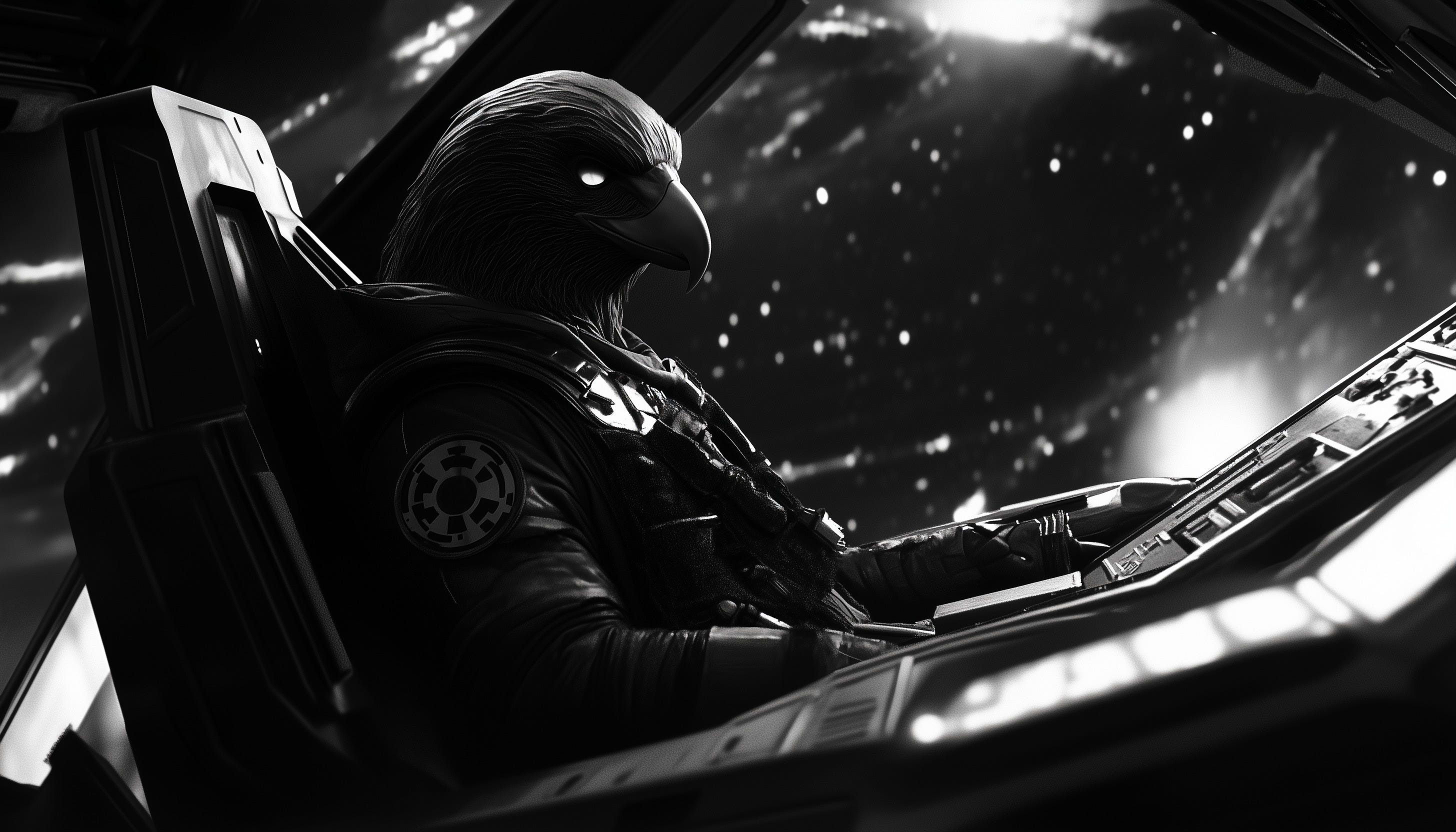
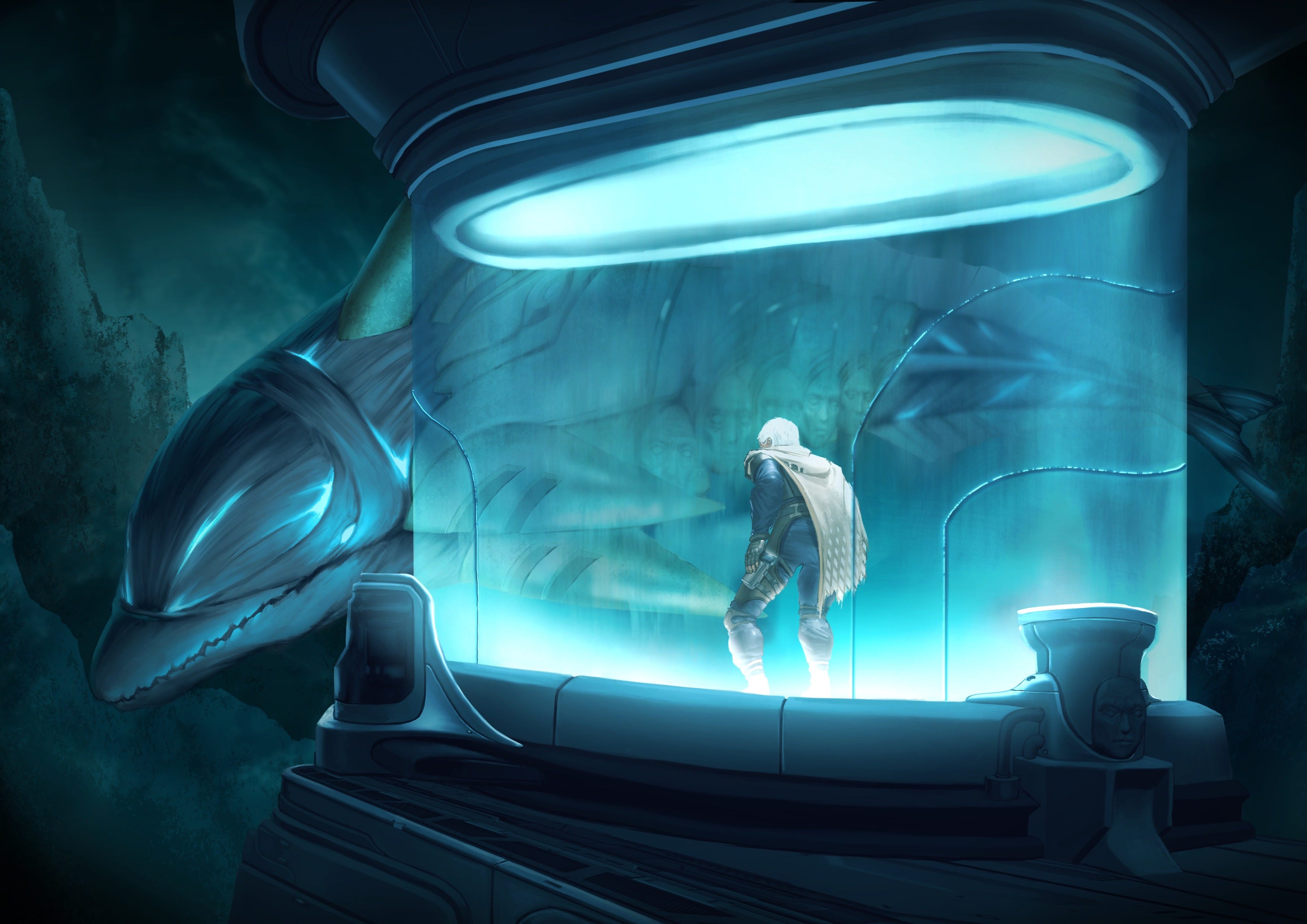
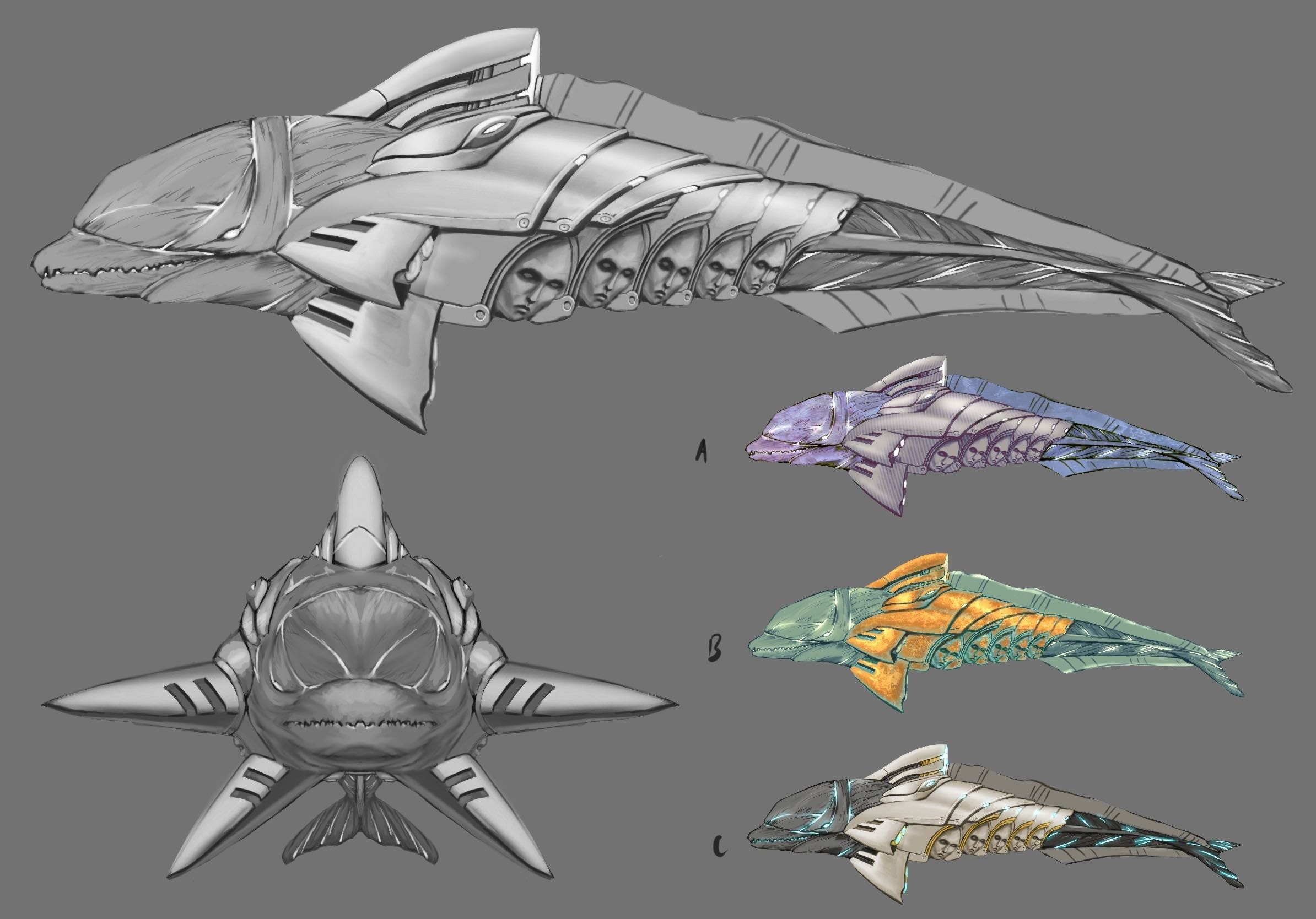
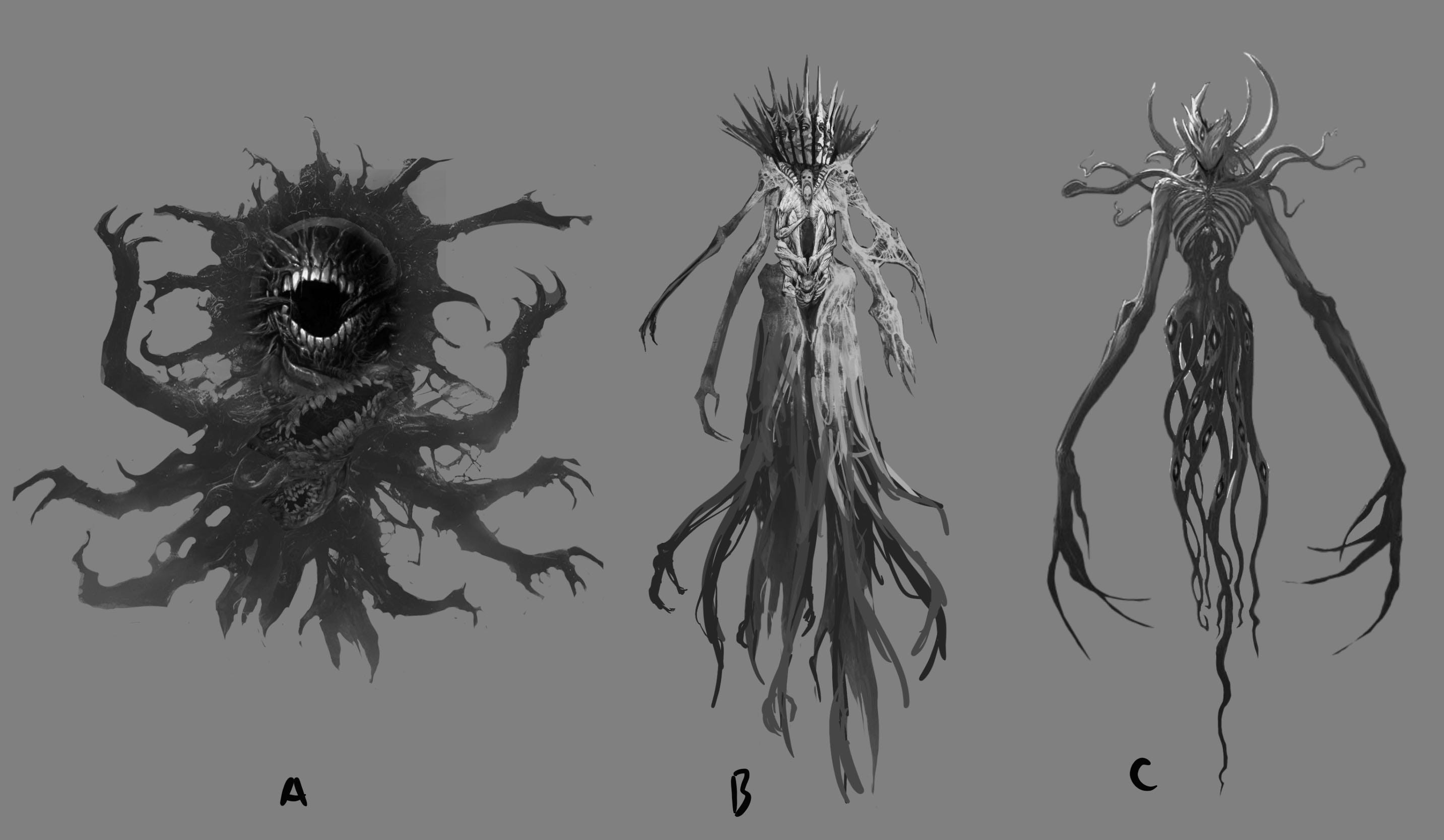
The crew of Russ’s ship the Aphelion become Vas’s family. His mother is an uplifted fox named Ingrish, who keeps her eyes covered with a scarf because she is telepathic. His uncle Ryker is an uplifted bird and the ship’s pilot. There is also Kitbit, a second generation uplift project of the dolphins, belong to a species of intelligent sea sponges that wear biomechanical bodies with porcelain faces. The final crewmember is the ship’s doctor, Tut, who is a true alien with tentacles for a face and sandpaper for a personality.
Vas’s command of human language is rudimentary at best, and his emotional development is painfully stunted. Russ is initially worried that spending his formative years being raised by bugs has left the kid retarded, which is why he gives him to Ingrish. Since she can communicate telepathically, she can actually talk to Vas, which means that she can both teach him and translate for him. It is through Ingrish that Vas first learns about friendship and love, emotions and relationships that he had never even encountered before.
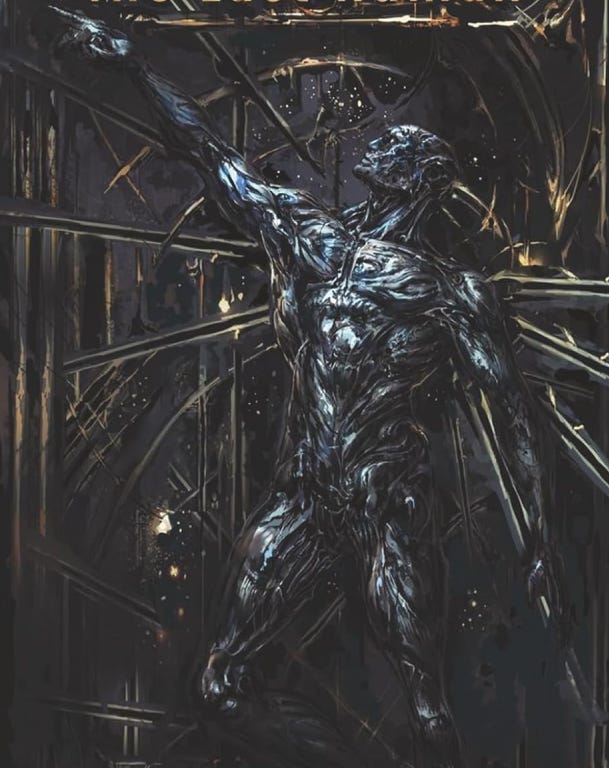
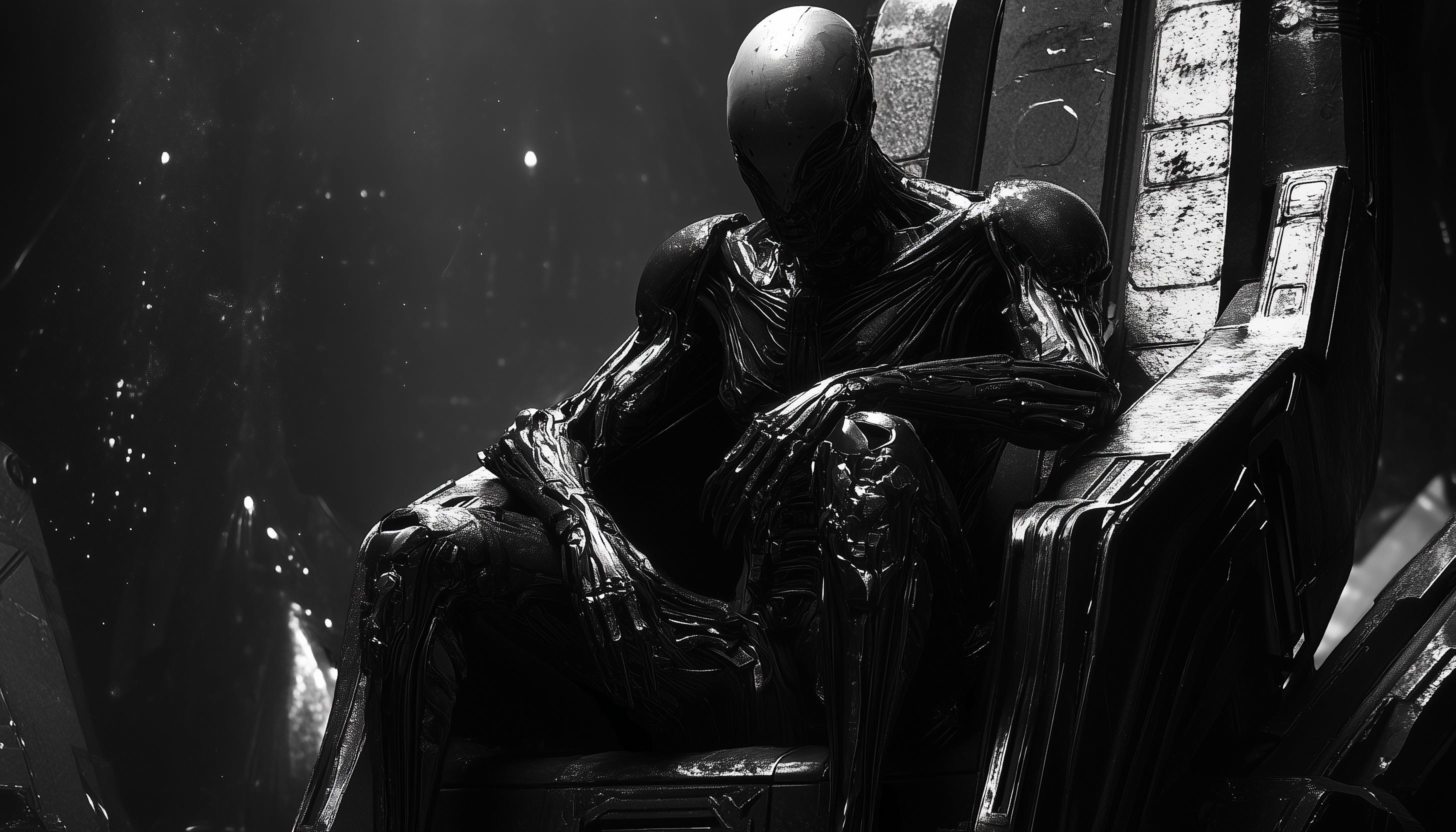
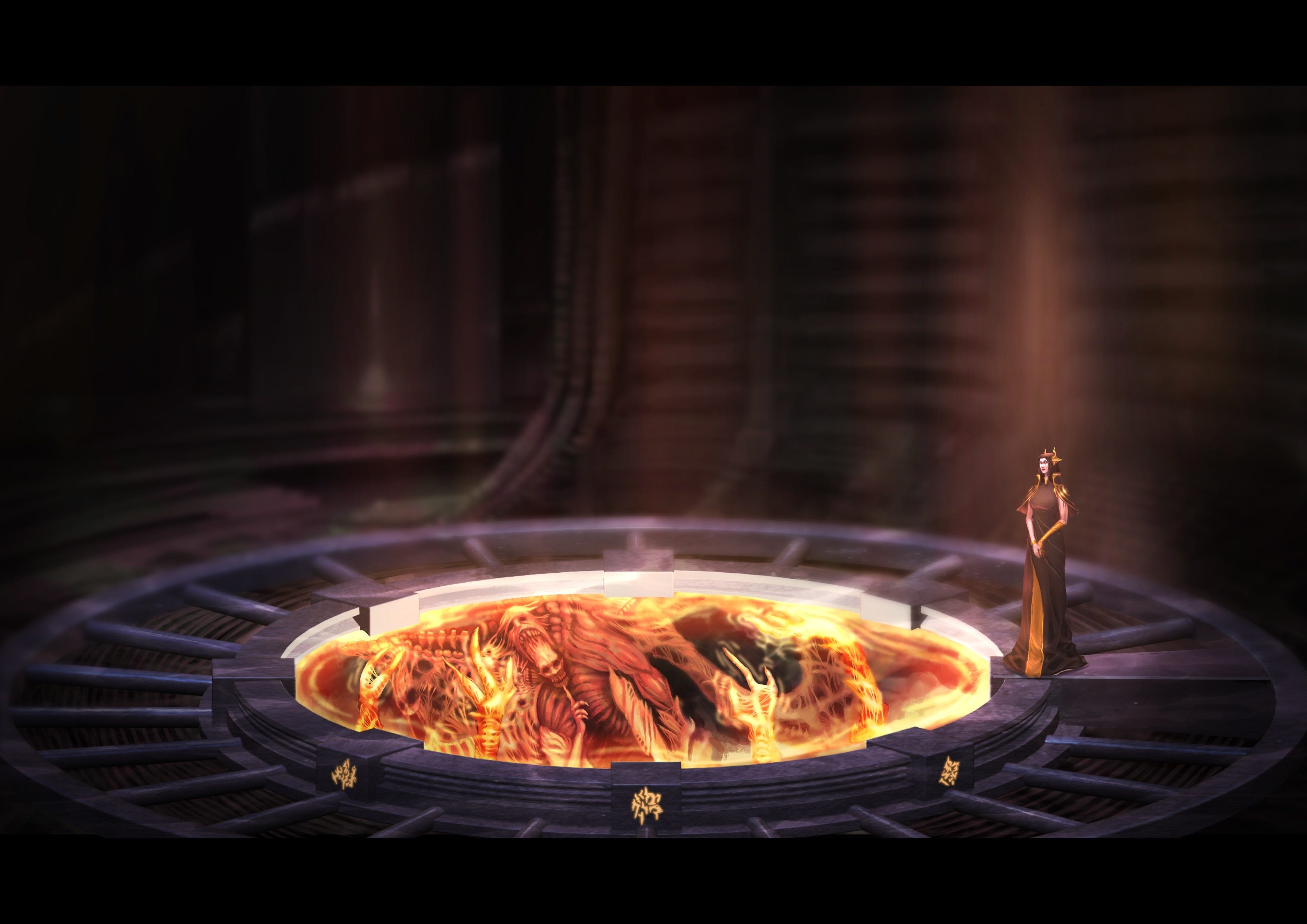
The world Vas inhabits feels like it takes place within an H. R. Giger painting, a place of dark biomechanical vistas, crumbling gothic technology, and monsters lurking in the shadows. Everywhere Vas probes in his world he finds horror, pain, and loss. The old emperor’s dry, dispassionate, and frank description of his earliest years helps the reader to gain some distance from the narrator’s traumatic upbringing, in which he witnesses, participates in, and is subjected to horrible things. In the course of this we meet a boy who ultimately transmutes this trauma into courage, in what small ways he can, as the events of the story unfold around him.
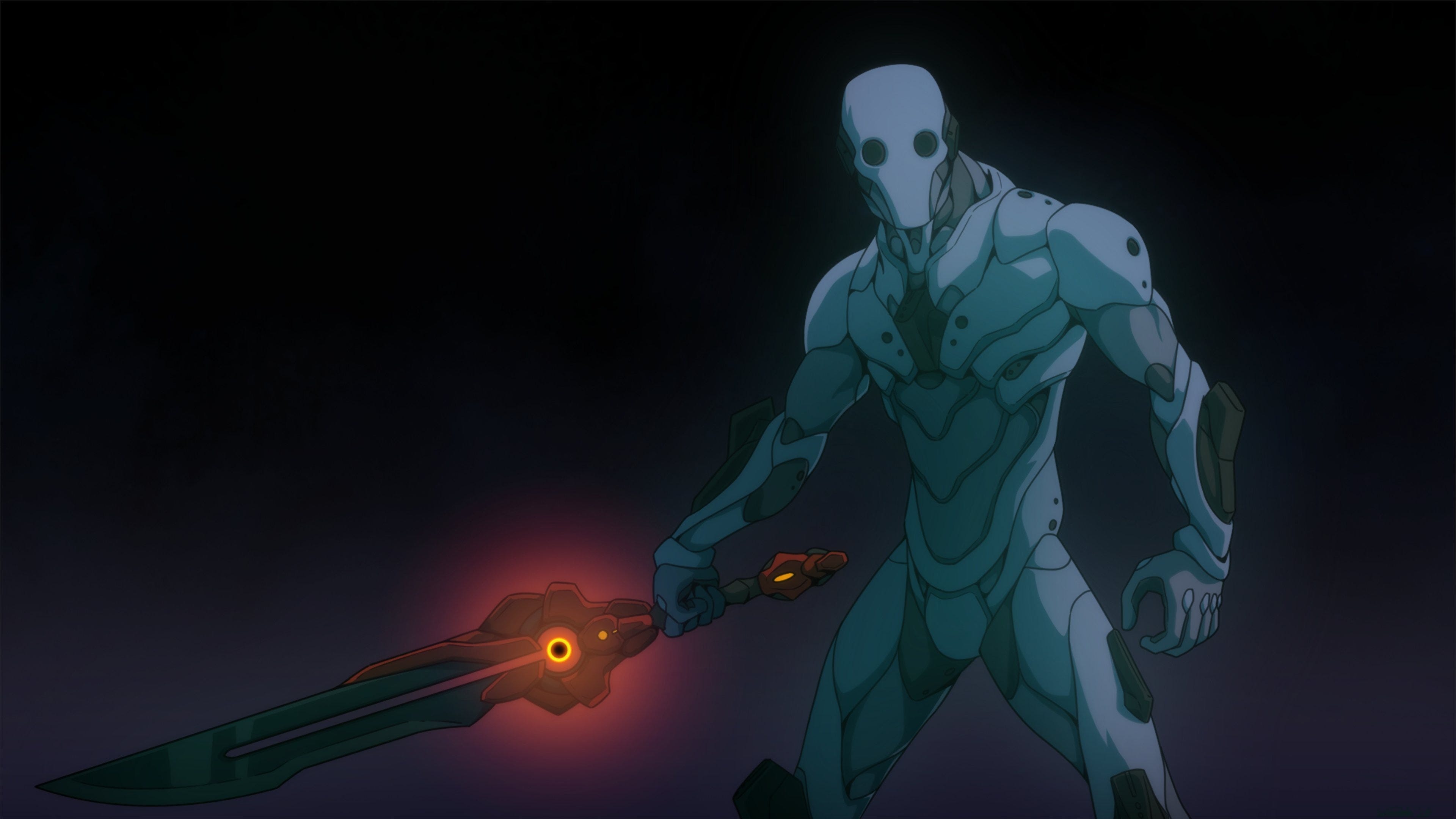
Shortly after rescuing the boy, Russ becomes involved in a sadistic form of gladiatorial gambling in which the prize is a hundred thousand human embryos from a recovered colony ship. Vas must watch a grisly surgical procedure as carapace armour, or Corpse Armour as it is also called, is grafted onto Russ, turning him into a mute and unkillable killing machine. As Russ goes off to easily win every match he fights, Vas gets picked up as a chess piece in the illicit political machinations surrounding the game. The aliens who run the game do so in order to tell a story, and the story they want to tell is that of Russ’s emotional torment and ultimate defeat. Vas does what he can to help (which isn’t actually that much, he is after all a little boy who understands almost nothing of what he’s seeing), and manages to avoid getting killed (which is more of an accomplishment), but he still gets kidnapped when a third force intervenes from outside the game and kicks over the table. The Galaxy is a violent and unstable place, a jungle in which every species is out for itself, and war is endemic.
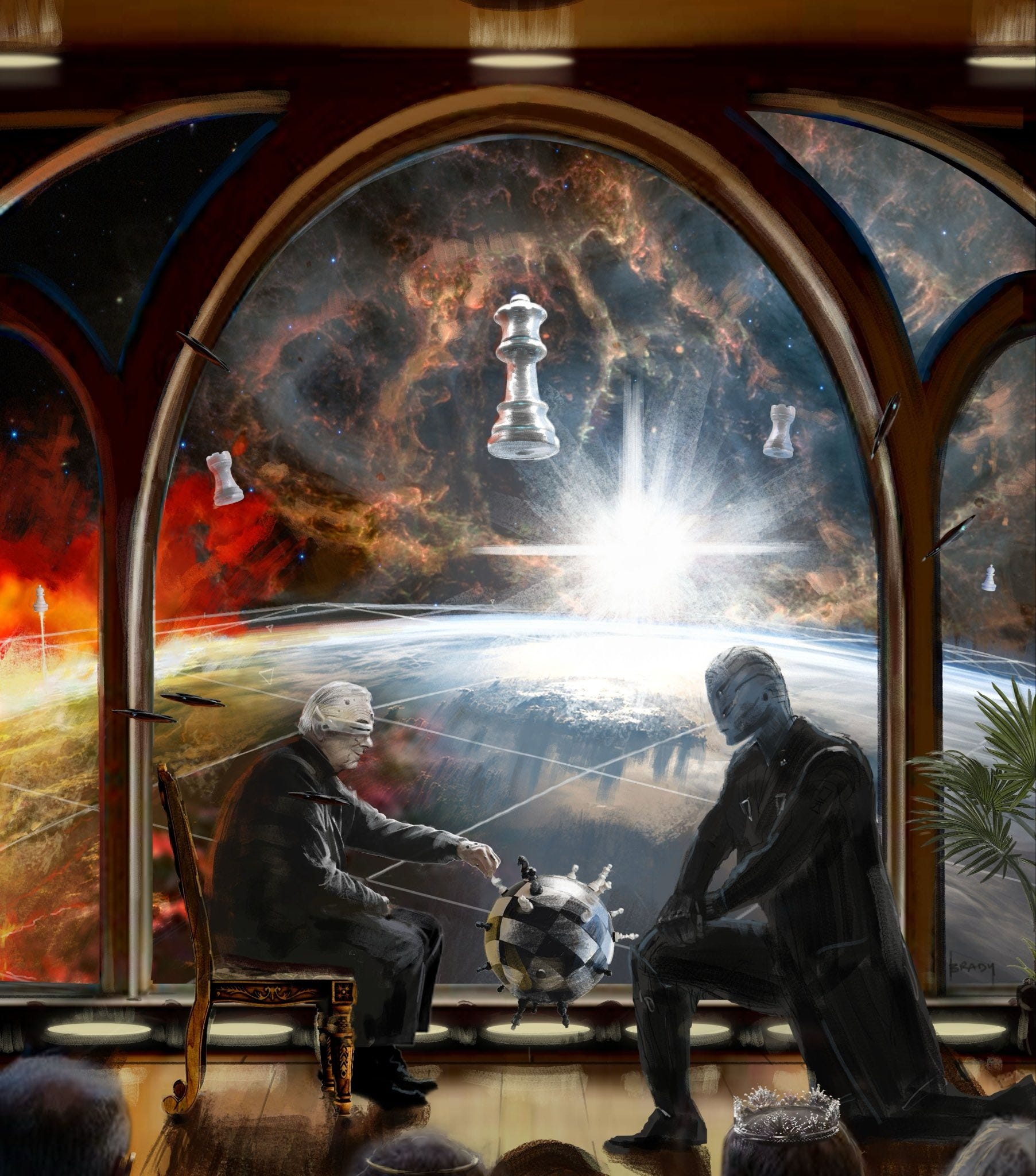
The aliens who abduct Vas turn out to be a posthuman clade, an offshoot of humanity who ultimately modified themselves so much that they left their humanity behind, and became horrors in their home in the deep warp, called Dark Space in this world. There is something of a question, in fact, as to whether Vas himself is really human. The original humans, which is to say us, who only lived for a hundred years, went extinct at least a hundred thousand years ago. Galactic humans have improved themselves in various ways, most obviously by making themselves much longer lived, but one also gets the sense that if compared to a contemporary human they would make impressive physical and intellectual specimens. Is Homo sapiens galacticus truly just humanity perfected, or should Vas’ race rather be designated H. galacticus? Perhaps Vas’s kind have already left their true humanity behind, and are now a made thing, like everything else in the Galaxy.
While the Galaxy of The Last Human is a jungle, it is an urban jungle down to its very DNA. There is not a single life-form which has not been modified many times over by intelligent intervention. The teeming intelligent species of the spiral arms have meanwhile made the industrial city their preferred habitat. Their surface industry covers continents and destroys ecosystems, while most of them live in vast orbital habitats. The distinction between artificial and natural has broken down completely, and has long since ceased to be something that anyone really worries about. There is just intelligent life in all its variety, and what it builds.
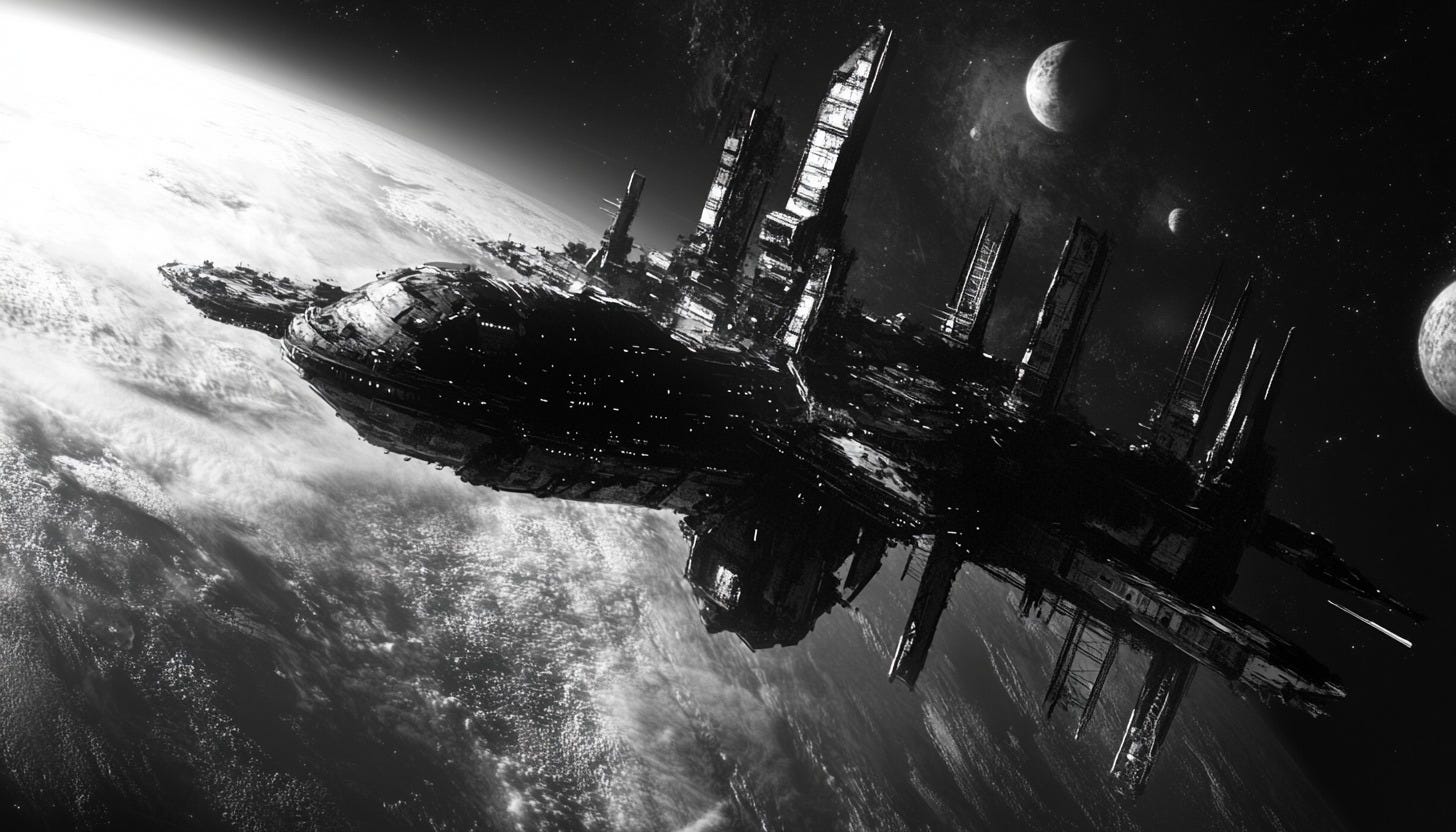
Vas cannot really say whether or not he himself is truly human, but he is certainly the last human child of his particular type. There are other humans, but most of them are living on the hidden world of Sanctuary, and all of those resident there are too old to have children. While Homo galacticus live for a thousand years, they are infertile past two hundred, and since it takes decades for them to reach sexual maturity their breeding window is not even this long. When Russ himself was of breeding age, he spent most of it in Corpse Armour, fighting the Aberrants, and by the time the war was over he was too old to sire children. Those humans who weren’t fighting were distracting themselves with various decadent pursuits, either having too much fun to bother with children, or so despondent at the fall of their civilization that they did not see the point. The end came when their worlds were destroyed at the end of the war and their dwindling numbers were scattered.
For Vas all of this isn’t just ancient history, it’s dead history. His homeworld Kaal, the planet his genetic lineage traces to, is now nothing but uninhabited, jungle-choked ruins. The people who made him are long gone. Vas is twice orphaned: not only are his parents dead, but the entire world to which he belonged was wiped away before he was even born. Vas hates it for this. History is just loss to him, just another source of pain. Even the great victory of humanity in the Fifth Aberrant War means nothing to him: his species sacrificed itself to make the Galaxy safe for its uplifted children, aliens who turned on humanity with unbridled ferocity the moment they had the chance, and have since turned the Galaxy into an abomination.
Not to put too fine a point on it – I would not want to suggest that the novel is mere allegory – but the relation between humans and uplifts in the novel mirrors that of white Westerners to non-Europeans in our own world. In the novel humans imposed their will upon animals to turn them into self-aware, sapient entities, bestowing upon them a great gift even as they ripped them out of a state of primordial innocence. The aliens both revere and hate humanity for this. In a similar fashion, Europeans imposed their culture onto the world, with the result that all of the world’s peoples are now cultural hybrids consisting of their root culture and the Western elements that have been grafted on. This has led not to gratitude but resentment, and now as our numbers dwindle our territories fill with aliens who often dress like us and talk like us, but are nonetheless something distinct, and who look for every opportunity to humble us as they elbow their way forward to take their place in the sun.
The narrative structure of The Last Human is far from linear. The ancient emperor composing it in his retirement often pauses the action for a philosophical digression, and sometimes prefaces events with historical exposition to set them into a proper context he did not know as a boy but apprehends perfectly well as an old man. We are reading the old man’s reflections, and Young ensures that we see these reflections clearly as he stares into the pool of his memories. This is an interesting literary technique, particularly for an action-driven high space opera story, as it sacrifices surprise in order to add a layer of contextual meaning. Since this is written as a historical document, this actually works very well. When we’re reading a work of history, we generally already know the rough outlines of the story. Before opening Caesar’s Commentaries on the the Gallic and Civil Wars, we know perfectly well how those wars turned out, and how Caesar himself ended. This is also true of myth, where the ending is not in question: everyone knows that Hercules completed his labours, that Icarus flew too close to the Sun, and that Christ rose from the dead. With histories it is not the arc of the story that concerns us, so much as the details within, including the thoughts of the great men who composed them.
Young did not wait until The Last Human was finished to publish it. He serialized the chapters on his Substack, and turned them into a very well-produced audiobook which he made available on YouTube and Spotify.
Young published everything for free, using his own work as its own promotional material, as he’s done for previous novels such as The Domes of Calrathia, which I also reviewed, and which I also loved. However, since I detest reading books on a screen, and much prefer reading to listening, I waited until the first 400 page book of The Last Human was completed, and then paid for the author signature edition on the Kickstarter that Young launched to print it. Immediately after I finished reading The Last Human, I picked up where it left off on Young’s Spotify channel, where the story continues for another twenty chapters that I haven’t finished listening to yet, but which still have me absolutely hooked. The second book is already complete, by the way, and available for free.
This is a book that hooks you from the very first page. Young writes with a vivid fluency which serves as a sort of honey to the setting’s bitterness. His pacing is excellent, never feeling either rushed or slow, leaving the reader curious about what follows at every step, while deftly raising the emotional stakes as additional details of the setting are revealed and as Vas’s character painfully develops. The novel wrestles with weighty issues of morality and philosophy – what is it to be human? can love exist between human and alien? what is our proper relationship to the past? and so on – without becoming tediously didactic, but rather weaves the exploration of these themes into the unfolding action of a world of stunning vistas and wondrous horrors at war permanent war with itself.
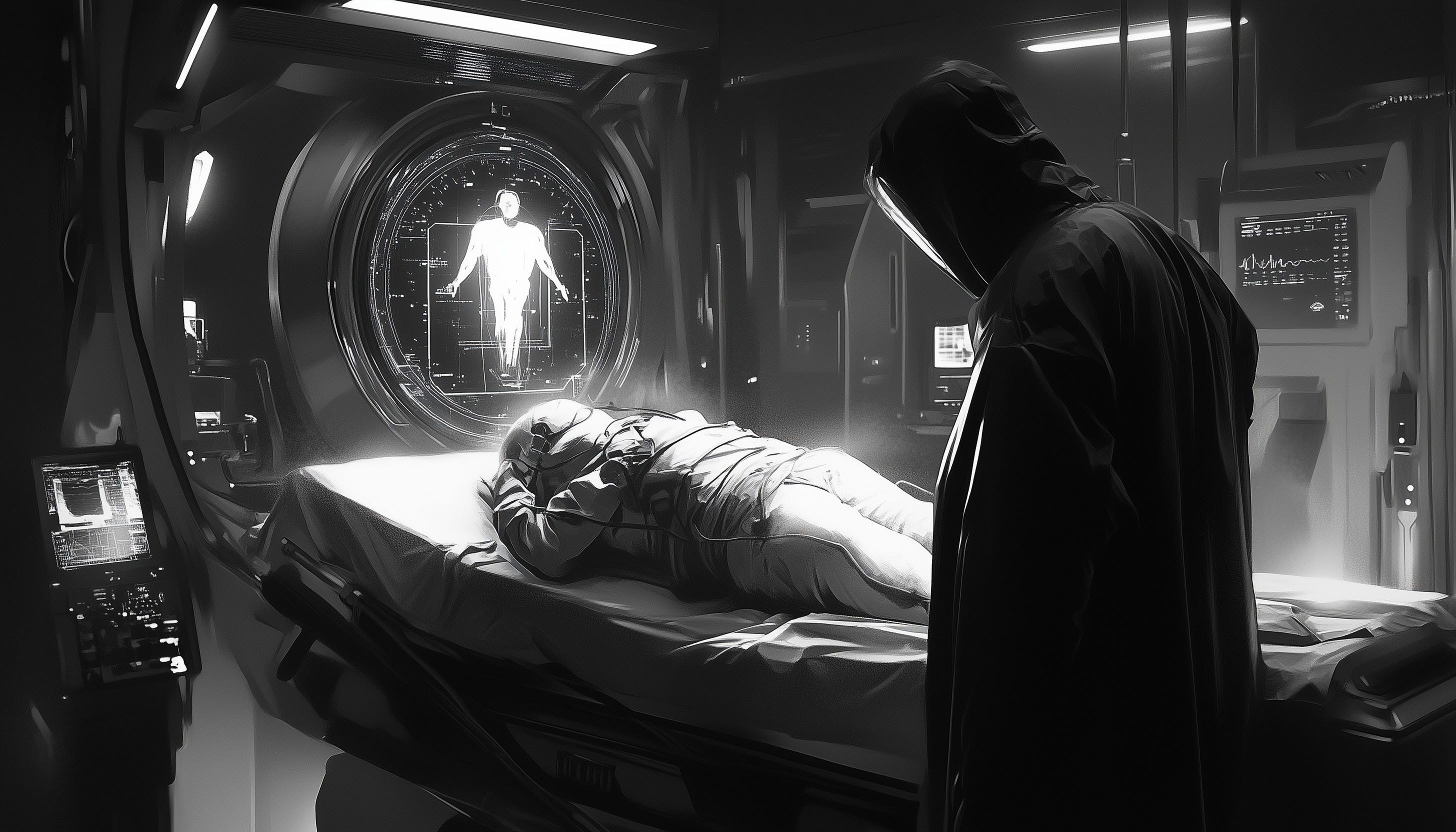
At the beginning of the story Young introduces us to the man who will destroy this world, and the old warlord begins his account of himself by showing the world that he decided to destroy, and the effect that world had upon him. In later instalments, presumably, we will begin to learn how Vas rose to power, and what led him to launch a crusade against the aliens. This is an ambitious project that Young has set himself. The first book covers just the first year or so of Vas’s life after being rescued by Russ, and we have almost a thousand years to go. The next novel picks up ten years later, with Vas in his twenties and therefore (by the standards of his species) still barely a teenager. At this rate, completing the epic will require quite a few additional volumes. The brilliant thing about it, however, is that even if Young doesn’t complete it, because the overarching story arc is known, each novel can stand on its own. Readers won’t be left in the dark wondering whether Vas ever ultimately succeeds. By revealing the end at the beginning, Young neatly sidesteps the failure mode of Robert Jordan and George R. R. Martin.
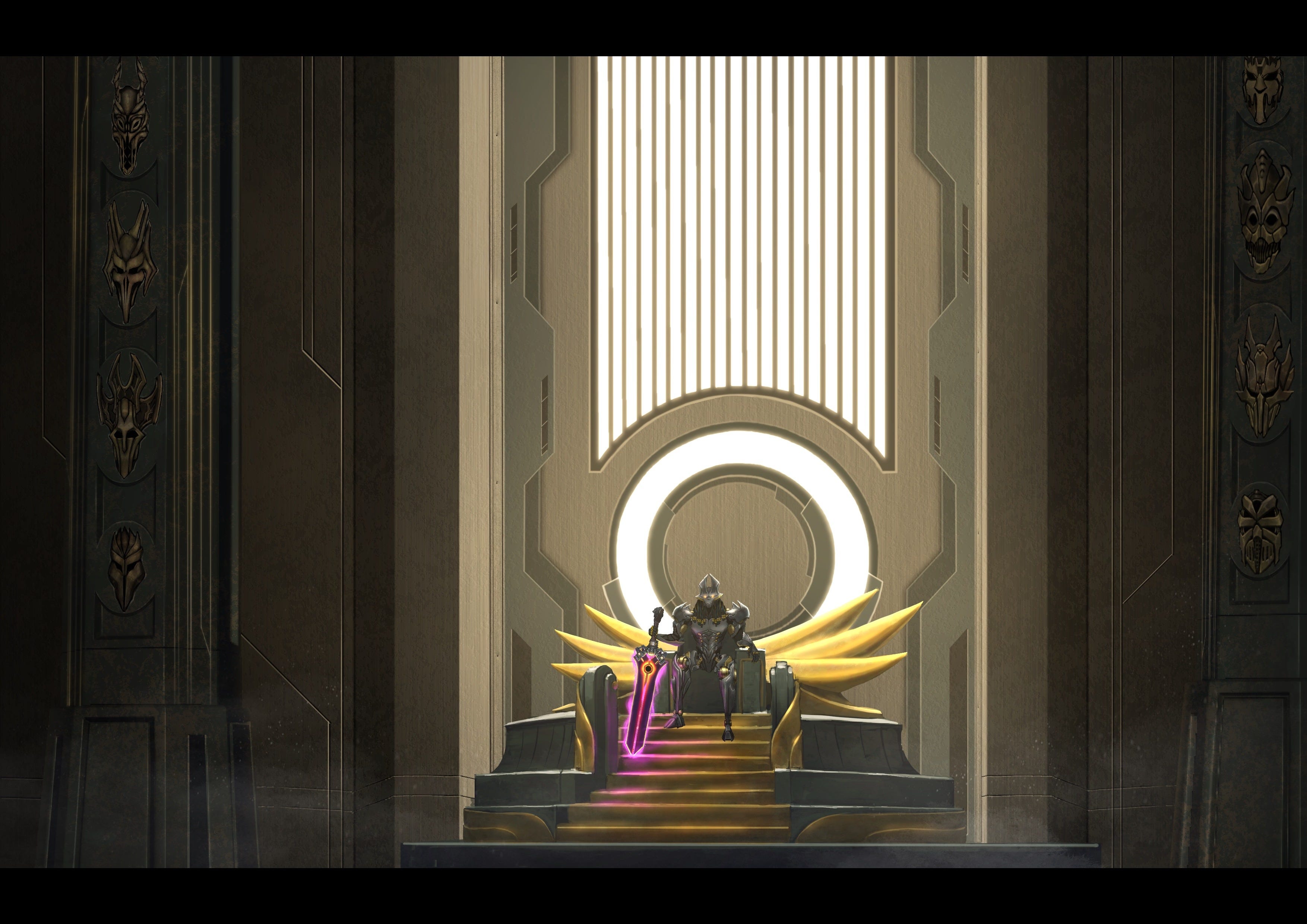
In many ways it feels like Young is not just telling a story, but elaborating a lore, as he gradually fills his world with weird species, strange planets, and a roster of heroes, rogues, and villains, all seen through the eyes of a great man of history as he relates the momentous events of his life. This is essentially what the most culturally successful franchises do, which rely just as much on creating a compelling world that people want to inhabit as they do on telling a story. The most extreme example of this is Warhammer 40k, in which the lore far eclipses the importance of any given story that has been told within the setting. Star Trek and Star Wars both follow this model too, serving as shared universes within which creators and fans can make up their own stories.
Only Young can specify the influences that went into The Last Human, but there were some threads I thought I could discern. The crumbling technology no one knows how to rebuild is reminiscent of Warhammer 40k, albeit with the humans in the position of the Eldar. The uplifted animals, and especially the uplifted dolphins, reminded me of David Brin’s Uplift novels, and particularly Startide Rising (one of my favourite novels as a child). A future imperial tyrant bound by a fate he cannot change to endure atrocity and inflict it is reminiscent of both Herbert’s Paul Atreides and Gene Wolfe’s Severian, and the memoir style in which the novel is written is the same as the device Wolfe used in The Book of the New Sun (though Wolfe does not reveal the end at the beginning of his narrative). Aesthetically, the biomechanical gothicism of the setting is pure H. R. Giger. Some of the elements reminded me of the classic anime Space Pirate Captain Harlock, other scenes seemed reminiscent of Berserk, and the theme of humanity lost and dying amidst what amounts to a vast and hostile cosmic megastructure filled with cybergenetic nightmares was somewhat like the haunting and stylish anime Blame! A boy, his father, and their dog alone against a miserable and threatening post-apocalyptic world seems a bit like Cormac McCarthy’s The Road. Disentangling all of these influences is something of a speculative game, as they have been blended and woven together into a compelling and unique synthesis that transcends pastiche and becomes something qualitatively original in a way that is very rare in this age of algorithms, franchises, and genre subcategories.
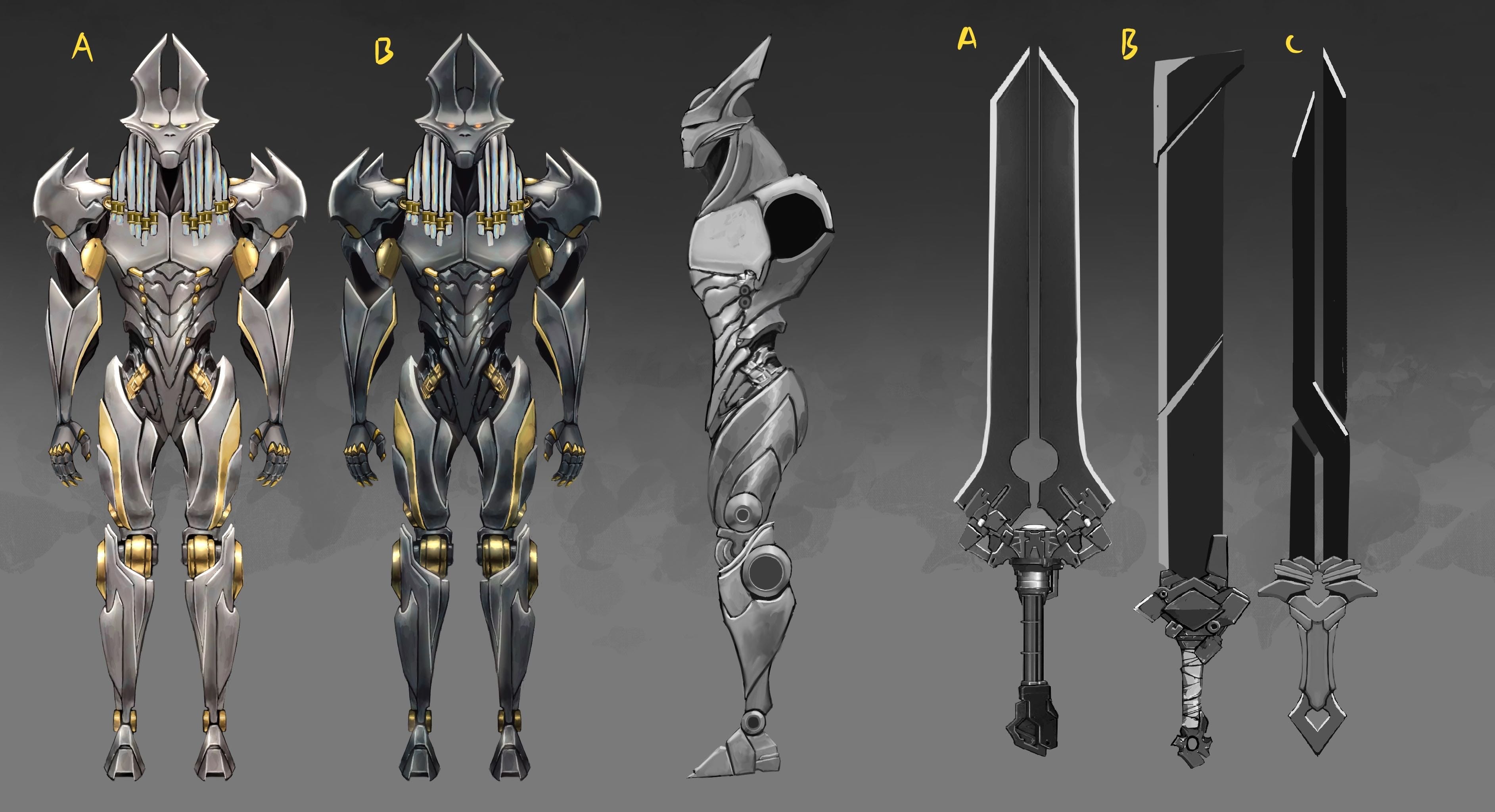
Young did not shy away from using AI generated art to promote his story, but he also went out of his way to retain the services of four different human artists in order to illustrate his vision. With the exception of Young’s own AI generated art, all of the art in this review is concept art the author paid people for. I think this is worth pointing out. There’s no reason for authors to avoid using new tools to enhance the aesthetic presentation of their work, but that does not mean that human creatives should be dispensed with. To the contrary, it’s essential for artists to support one another when they can. Young would know. He’s a young writer attempting the quixotic task of making it as a novelist in a world in which all the crumbling, dysfunctional old institutions that might have fostered him have instead locked him out, leaving him to his own devices to figure out a path forward as best he can. If we want people to keep making art, we have to pay them, and so Young does what he can by spreading the money around.
Until recently, the only way to get a paper copy of The Last Human was by joining the Kickstarter. As of right now, however, the paperback is available for purchase on Amazon, where you can also buy the Kindle edition. The novel already has seven 5-star reviews, so you can tell I’m not the only one who was just blown away by this. However, its bestseller rank is currently sitting in the low thousands in its category. It is my fond hope that the hordes of Barsoom can elevate The Last Human to a station more befitting of its status. This is a ride that you want to buy the ticket for. Or you could go spend that money watching Lupita, Zendaya, and Elliot Page stumbling through the Odyssey, if you’d rather support the Great Replacement in art than enjoy great art that grapples with the Great Replacement.
Thank you for taking the time to read this. I hope you found this book review interesting to read in its own right, and of course I hope that, when you all click through to Amazon to pick up a copy, you enjoy it as much as I did. If you do, don’t forget to leave reviews of your own on Amazon, as that really helps the author.
As always, my deepest gratitude is reserved for my supporters, whose long-suffering patience keeps the lights on as a whine to myself about writers block and try to decide which of the 10,000 word essays I’ve written over the last few months is the right one to polish up for public presentation. I could not do this without you, and your loyalty is never anything short of humbling.
Isaac Young is a fantastic writer and the Last Human is a great work of literature, and I'm happy to see that you've enjoyed it too. Just a very important correction: the audiobook is definitely NOT AI narrated, the narrator is the very talented Son of Sonnet ( https://www.sonofsonnet.com/ ), that also narrated Domes of Calrathia and is now narrating Dead Men Running too. Alongside many other indie books.
>Even the great victory of humanity in the Fifth Aberrant War means nothing to him: his species sacrificed itself to make the Galaxy safe for its uplifted children, aliens who turned on humanity with unbridled ferocity the moment they had the chance, and have since turned the Galaxy into an abomination.
There were predictions. Some people understood the implications.
Edgar Rice Burroughs' Beyond Thirty, in which Europe has a Mutually Destructive peer power war which inflicts enough economic and infrastructural damage that the resulting post-apocalyptic wasteland is vengefully reverse-colonized by the Global South.
Written immediately before the outbreak of WWI.
Also there are tigers because of feral breeding populations escaped from zoos and this is Edgar Rice Burroughs we're talking about, he's gonna write swashbuckling adventure fiction.
https://x.com/ChristianHeiens/status/2026405000193146917